Blog
How to Spot a Fake "Authentic" Restaurant, a Practical Guide
Authentic" is the most overused word on a restaurant menu. Here's how government certification marks actually work, which ones are worth trusting, and what to check when a restaurant doesn't have one.
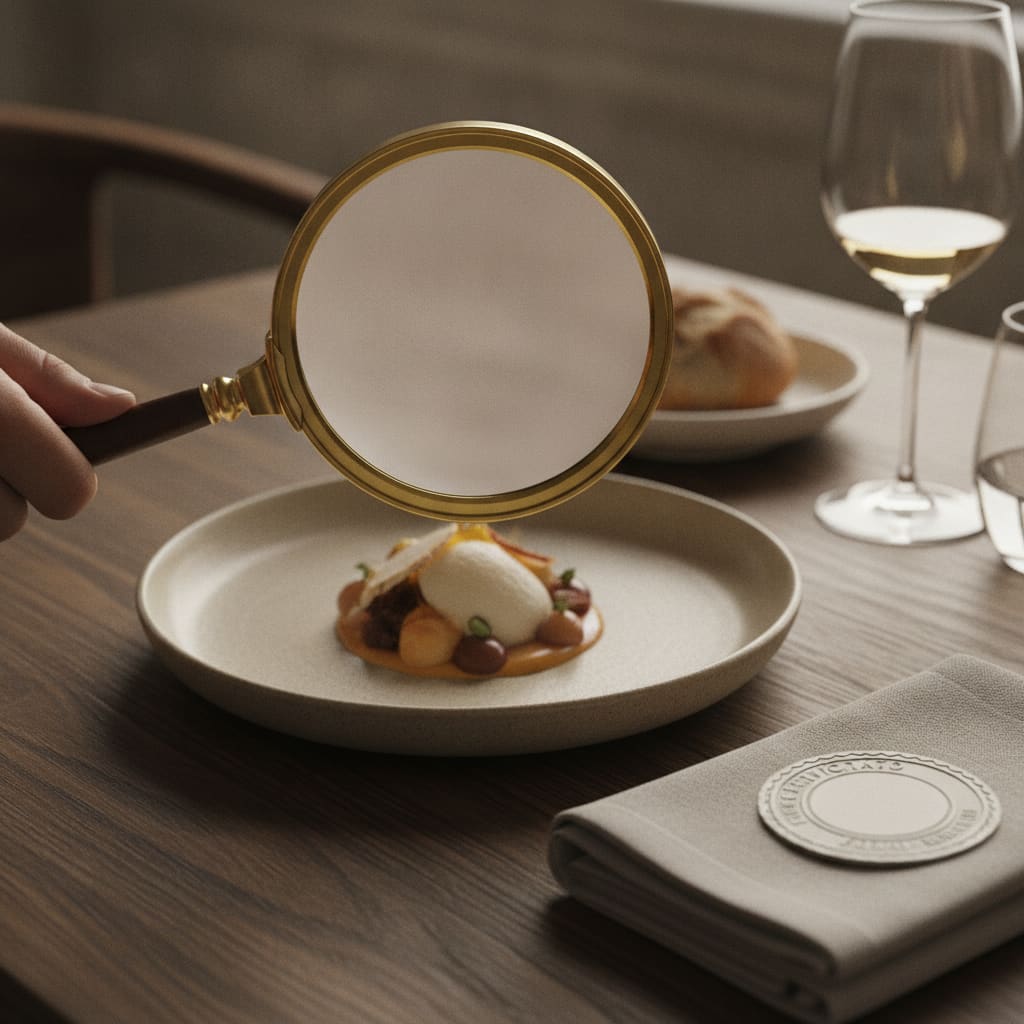
"Authentic" is printed on more restaurant signage than any single word can honestly support. It's cheap to claim and hard to verify, which is exactly why a handful of governments and trade associations have built formal certification systems to do the verifying for you. Here's what those systems actually check, and what to look for when a restaurant doesn't have one.
The certification marks that actually mean something
Not every "authentic" claim is unverifiable. A few marks exist specifically to put a floor under the word.
Thai SELECT (Thailand) certifies restaurants abroad against a specific checklist: at least 70% Thai dishes on the menu, a Thai head chef, minimum six months in operation, and hygiene and atmosphere standards, recertified every three years by Thailand's Department of International Trade Promotion. We covered it in detail in our first post in this series.
AVPN / Verace Pizza Napoletana (Italy) is arguably the strictest food certification in the world. Founded in 1984 and recognized as an official Italian government office, it certifies Neapolitan pizzerias globally against a formal standard, UNI 10791:1998, that specifies exact ingredients: San Marzano or Roma tomatoes only, Mozzarella di Bufala Campana sourced from water buffalo in Campania or Lazio, high-protein flour, and a strict, narrow ingredient list beyond that. A restaurant can't self-declare AVPN certification; it's audited.
Ospitalità Italiana (Italy) is broader than AVPN, an Italian government initiative certifying overall hospitality and culinary standards at Italian restaurants worldwide, not limited to pizza.
The common thread across all of these: certification requires an application, an external audit or evaluation, and a renewal cycle. None of them are marks a restaurant can just print on a menu because they feel like it.
Red flags when there's no certification mark
Most cuisines don't have a formal government certification program, which doesn't mean every uncertified restaurant is faking it, most authentic restaurants everywhere have no certification at all. But a few practical signals still hold up:
- Menu breadth is a tell. A restaurant genuinely rooted in one cuisine tends to have a focused menu. A menu that spans four or five unrelated national cuisines under one roof is optimizing for broad local appeal, not fidelity to any one of them.
- Ingredient sourcing gets specific, not vague. Restaurants confident in their authenticity tend to name specific ingredients, farms, or regions. Vague language ("traditional spices," "authentic recipe") without specifics is a soft signal, not a hard one, but it's a pattern worth noticing.
- Staff and ownership composition matters, but isn't everything. It's a reasonable data point, not a rule; plenty of genuinely excellent, faithful cooking comes from cooks who learned a cuisine seriously without being born into it.
- Heavy sweetening or flavor-flattening for a local palate is a real, documented pattern. Researchers studying gastrodiplomacy campaigns have specifically noted that dishes spreading fastest internationally are often the versions adapted furthest from tradition, not the most faithful ones. That's not automatically bad food, but it's not the same thing the certification programs above are checking for.
- Reviews mentioning "different from what I had in [country]" repeatedly are a more reliable signal than a five-star average alone. A single such review might be one picky diner; a pattern across many reviews is data.
What certification doesn't tell you
It's worth being honest about the limits here too. None of these marks are taste guarantees, and none of them are food-safety inspections. A Thai SELECT or AVPN-certified restaurant has proven it meets a specific, narrow standard, not that you personally will love the food. And a restaurant without any certification at all can still be more faithful to its cuisine's roots than a certified one down the street; certification programs measure compliance with a checklist, not culinary soul.
Think of these marks the way you'd think of a food-safety grade: a useful floor, not a ceiling. They're most valuable exactly when you have no other way to judge, a cuisine you're unfamiliar with, in a city where you don't know the local landscape. In that situation, a recognized government or trade-association mark is a meaningfully better starting signal than a menu that simply uses the word "authentic" a lot.
Next in this series: a look at Peru's government-backed push to turn ceviche and Nikkei cuisine into a global culinary export, and how that campaign approached authenticity differently from Thailand's certification model.