Blog
The American Chef Corps: When the State Department Recruits Chefs Instead of Diplomats
In 2012 the US State Department recruited more than 80 chefs, including the White House Executive Chef and José Andrés, into an official diplomatic corps. Here's how a country with no single national cuisine runs culinary diplomacy.
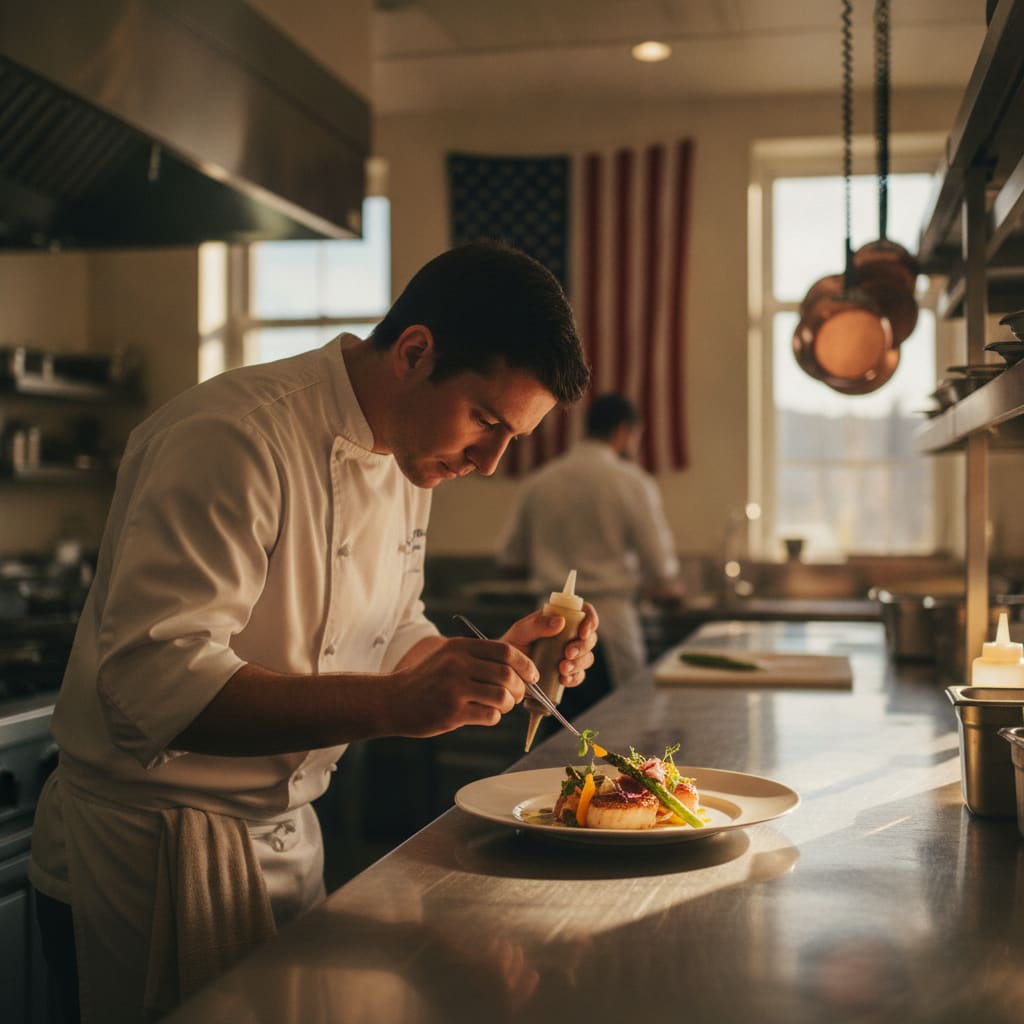
Every other program in this series is built around a single, definable national cuisine: Thai food, Korean food, Japanese washoku. The United States doesn't have that option, and its culinary diplomacy program is shaped entirely by that constraint.
A corps, not a cuisine
In September 2012, the State Department officially launched the Culinary Diplomacy Partnership Initiative, recruiting more than 80 chefs into what became known as the American Chef Corps. The list included White House Executive Chef Cristeta Comerford, former White House Executive Pastry Chef William Yosses, and a roster of internationally recognized names: José Andrés, the Spanish-born chef behind minibar, Jaleo, and Oyamel, who later became far more widely known for World Central Kitchen's disaster-relief food operations; Dan Barber of Blue Hill, known for sustainable, farm-to-table cooking; Rick Bayless, whose Frontera Grill and PBS series built his reputation as a leading American authority on Mexican cuisine; and April Bloomfield of The Spotted Pig, a two-Michelin-star chef.
That list itself makes the point. There's no unifying cuisine across it, Spanish, French, Mexican, farm-to-table American, gastropub British. The State Department wasn't promoting a national dish the way Thailand promotes pad thai or Peru promotes ceviche. It was promoting American culinary culture as inherently plural, built by immigrants and regional traditions rather than a single defining cuisine, and using individual chefs as ambassadors for that pluralism rather than for any one style of cooking.
How the corps actually gets used
Unlike Thailand's certification system or Korea's export-target campaign, the American Chef Corps doesn't run a restaurant-growth program abroad. Its function is closer to what the name implies: chefs get deployed, informally, at official diplomatic functions, state dinners, international events, and cultural exchange programs, representing American food culture in person rather than through a marketing campaign or certification mark.
This matches a broader pattern in how the US has historically approached food at the diplomatic table. State dinners, like the 2011 Buckingham Palace banquet for President and First Lady Obama, or the 2016 state dinner Obama hosted for Italian Prime Minister Matteo Renzi, have long functioned as a visible, high-profile venue for exactly this kind of soft-power display, even outside the formal Chef Corps structure.
Why this model fits the US case
A single-cuisine certification system, the Thai SELECT model, doesn't map cleanly onto American food, because there's no consensus on what "authentic American cuisine" even is in the way there's consensus on what authentic Thai or Neapolitan pizza cooking looks like. Regional American cuisines, Tex-Mex, Cajun, Pacific Northwest, Southern, are themselves often blends of immigrant traditions layered on top of each other. Trying to certify restaurants against a fixed "American" standard would flatten exactly the diversity that makes the cuisine what it is.
Recruiting individual chefs as ambassadors sidesteps that problem entirely. Each chef represents their own specific culinary tradition and expertise, collectively adding up to a picture of American food as diverse rather than singular. It's a more personality-driven, harder-to-scale model than Thailand's or Korea's government-run programs, but it's arguably the only model that could work for a country without one national cuisine to export.
The takeaway
The American Chef Corps is a useful reminder that gastrodiplomacy isn't a single template countries copy from each other. Thailand certifies restaurants. Korea funded institutions and set export targets. Taiwan leaned into visual, exportable food culture. The US recruited people. Each approach reflects something real about what that country's food culture actually is, and what kind of soft power it's realistically able to project through it.
Sources: Culinary diplomacy, Wikipedia.