Blog
Kimchi Diplomacy: Inside South Korea's $77 Million Bet on Its Own Food
In 2009 South Korea committed $77 million to make Korean food globally popular. Fifteen-plus years later, kimchi exports hit record highs and hansik went mainstream, but the campaign also drew real criticism.
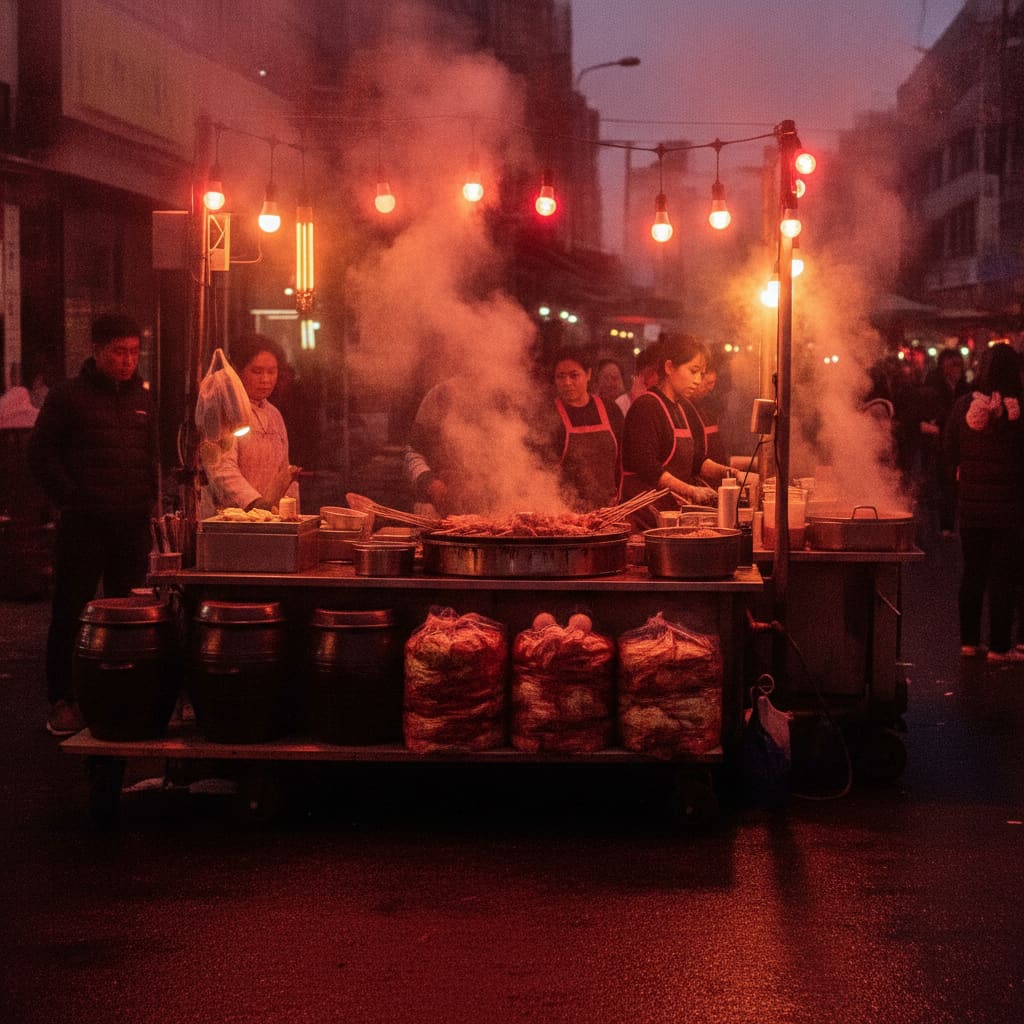
In 2009, South Korea's government did something most countries don't: it put a number on how popular it wanted its food to become. The goal, attached to a $77 million program called "Korean Cuisine to the World," or Global Hansik, was to make Korean food one of the world's top five most popular cuisines and grow the number of Korean restaurants abroad to 40,000 by 2017. It became known internationally, somewhat affectionately, as Kimchi Diplomacy.
Why Korea decided to bet on food
The program was run by the Ministry of Food, Agriculture, Forestry and Fisheries, with backing from then-First Lady Kim Yoon-ok, who spoke at the 2009 launch symposium. The logic behind it was straightforward: Korea had already proven, through K-pop and Korean dramas, that culture could be exported deliberately and successfully. Food was the next frontier, and unlike music or television, it came with a built-in export industry attached: more people eating Korean food abroad meant more demand for Korean ingredients, more Korean restaurants employing Korean staff, and more tourism tied to food experiences.
What the money actually built
Global Hansik wasn't just an ad campaign. It funded institutions and projects meant to outlast the initial push:
- The World Institute of Kimchi, a dedicated research body studying kimchi's health properties, fermentation science, and global market potential
- Efforts to get Korean cuisine into internationally recognized culinary school curricula, so chefs trained abroad would learn hansik as a legitimate cuisine rather than picking it up informally
- The "Kimchi Bus," a touring food truck that offered tastings in more than 30 countries, a deliberately low-cost, high-visibility alternative to embassy dinners
That last pivot mattered. The original 2009 campaign leaned heavily on royal-court cuisine, elaborate, historically prestigious dishes that critics found inaccessible and slow to catch on. Officials shifted toward grassroots, street-level exposure instead, betting that first contact with Korean food should be cheap, casual, and easy to repeat, not a formal tasting menu.
Did it actually work?
By most trade measures, yes. South Korea's kimchi exports hit a record $159.9 million in 2021, more than a decade after the campaign launched. Gastrodiplomacy-focused research on specific markets, Indonesia among them, has linked targeted kimchi promotion to measurable increases in the number of Korean restaurants, kimchi imports, and general interest in Korean food. Korean cuisine's visibility in the US and Europe by the 2020s, evident in the sheer number of Korean fried chicken chains, Korean barbecue spots, and kimchi appearing on menus that have nothing else to do with Korea, is hard to separate from over a decade of deliberate government investment.
But it wasn't a clean win. Financial Times correspondent Christian Oliver criticized the program for "seeking to quantify the unquantifiable," pointing out that no official international ranking of cuisine popularity actually exists, so Korea's own "top five" target was never something that could be objectively verified or failed. That's a real structural problem for any gastrodiplomacy program: the harder goals (soft power, cultural affinity) resist measurement, so governments often fall back on easier-to-report numbers (restaurant counts, export dollars) that don't fully capture whether the underlying goal, people actually liking and trusting the country more, was met.
There's also a quieter authenticity trade-off. Researchers studying the campaign have noted that some of Korean food's global success came from adapting it, not preserving it: Korean chefs abroad found real traction pairing kimchi's funk with more familiar flavor profiles, including, in a few well-documented cases, Mexican ingredients in Korean-Mexican fusion cooking. That's a pattern worth watching across every gastrodiplomacy program: the version of a cuisine that spreads fastest abroad is rarely the most traditional version of it.
The takeaway
Kimchi Diplomacy is one of the best-documented gastrodiplomacy programs precisely because it's old enough now to actually judge. It shows both halves of the story other countries' newer programs haven't lived long enough to prove yet: food-as-soft-power can produce real, measurable trade and cultural outcomes, and it can also drift from its original cultural intent the more successfully it spreads. If you're eating at a Korean restaurant today anywhere outside Korea, there's a reasonable chance its existence traces back, at least indirectly, to a $77 million bet a government made in 2009.
Sources: The Hustle on South Korea's food diplomacy; Culinary diplomacy, Wikipedia.