Blog
A 1955 McDonald's Soda Was 7 Ounces. Today's Large Is 30
The original 1955 fries were 2.4 ounces and 210 calories. A large today is 5.9 ounces and about 480. The single soda size was 7 ounces; the largest cups have run to 42. Here's the seventy-year growth curve.
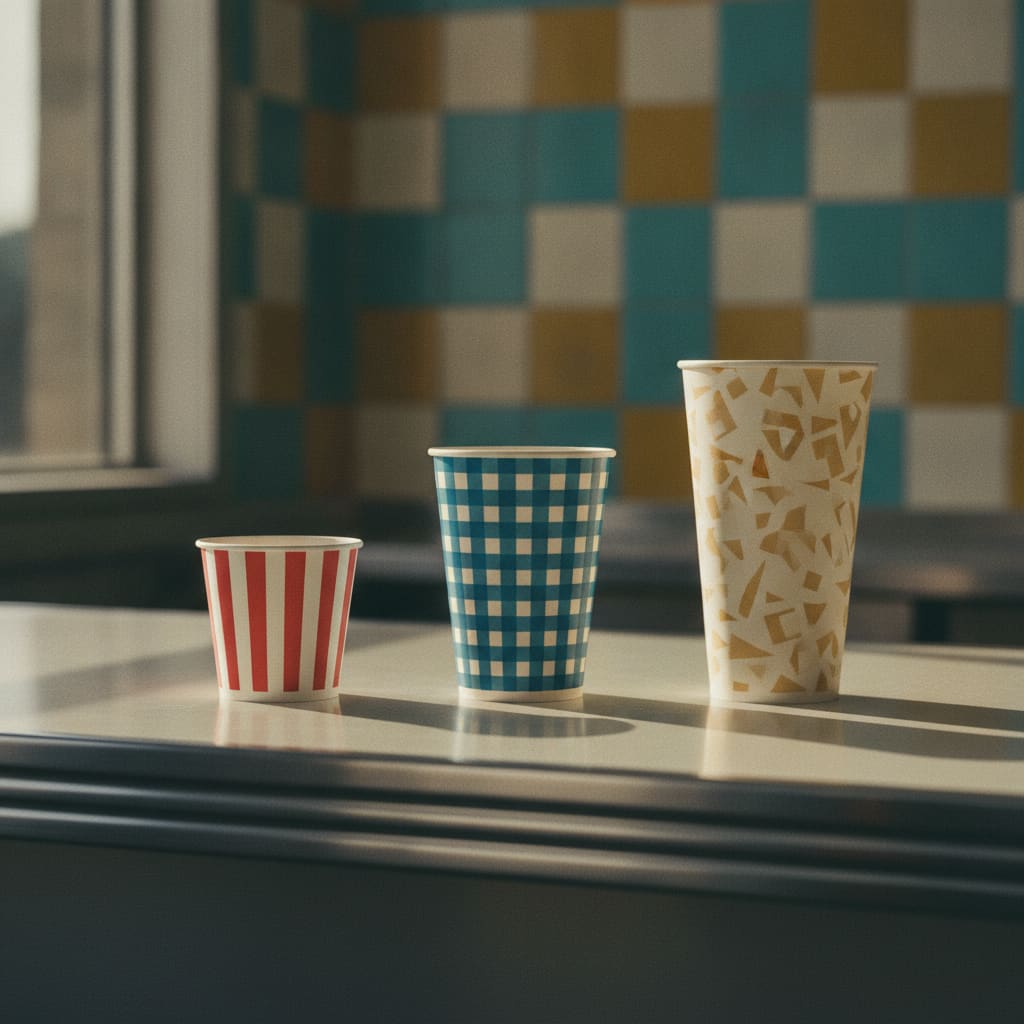
In 1955, a McDonald's customer had almost no decisions to make. There was one size of fries, one size of soda, and one hamburger. The absence of choice is the part worth sitting with, "small, medium, large" is not an eternal feature of eating out, it is a product invented later.
The three curves
Fries. The 1955 serving was 2.4 ounces, about 210 calories. Today's large is roughly 5.9 ounces and about 480 calories, around 150% more. The late-1980s Supersize peaked near 7.1 ounces, nearly triple the original, before being retired in 2004.
Soda. One size, 7 ounces. Today's large runs 30 ounces, and cups have gone as high as 42, six times the original. Soda is the steepest curve of the three, which follows directly from economics: syrup and water are the cheapest thing on the premises, and a bigger cup costs a restaurant a couple of cents while adding a dollar to the price.
Burgers. The original hamburger was 3.7 ounces. Quarter Pounders with cheese and Big Macs land in the 7-9+ ounce range assembled, roughly a 200% increase.
Nobody decided to do this
There was no meeting where portions doubled. It happened through a chain of individually reasonable decisions:
The cheapest input in fast food is the food. Real estate, labor, packaging, and marketing dominate the cost of serving one customer. Once someone is standing at your counter, giving them 40% more fries costs you a few cents and lets you charge 60% more. Every operator discovers this independently.
Then size became competitive. Once one chain offers a bigger portion at a similar price, "value" gets defined by volume, and no competitor can offer less without looking stingy. Supersize was the visible peak of that race.
And the anchor moved. The names stayed while the contents grew, so today's "medium" is bigger than the original "one size." Customers ordering the middle option are not choosing restraint against 1955: they are choosing the middle of a scale that shifted underneath them.
The health line, stated carefully
Over the same seventy years, US adult obesity went from roughly 10-15% to over 40%. Portion growth is one factor among many, sedentary work, car dependence, snacking frequency, sleep, and the entire packaged-food aisle all moved too. Portion size did not act alone, and anyone selling you a single-cause story about obesity is selling something.
What research does support is more specific and more useful: people eat substantially more when served more, regardless of hunger, and they do not compensate later. The plate is a stronger signal than the stomach. That effect is well documented and it means portion inflation does real work even if it is not the whole story.
The practical version
You cannot un-grow the cups, but two things still work:
- Order by the old scale. Today's small is close to yesterday's regular. It is not a diet decision, it is a units correction.
- Check the number before you order the size. The calorie gap between a small and a large side is often larger than the gap between two entrées: the per-chain calorie pages make that visible in a way the menu board deliberately does not.
The interesting thing about the 1955 menu is not that it was healthier. It is that it never asked you to make this decision at all.