Blog
The Drive-Thru Got Slower. The 2025 Study Says 4 Minutes 15 Seconds
The annual QSR drive-thru study clocked average total service time at 4 minutes 15 seconds in 2025, ten seconds worse than 2024. AI-enabled lanes came in at 3:53. Here's why the lane keeps getting harder to speed up.
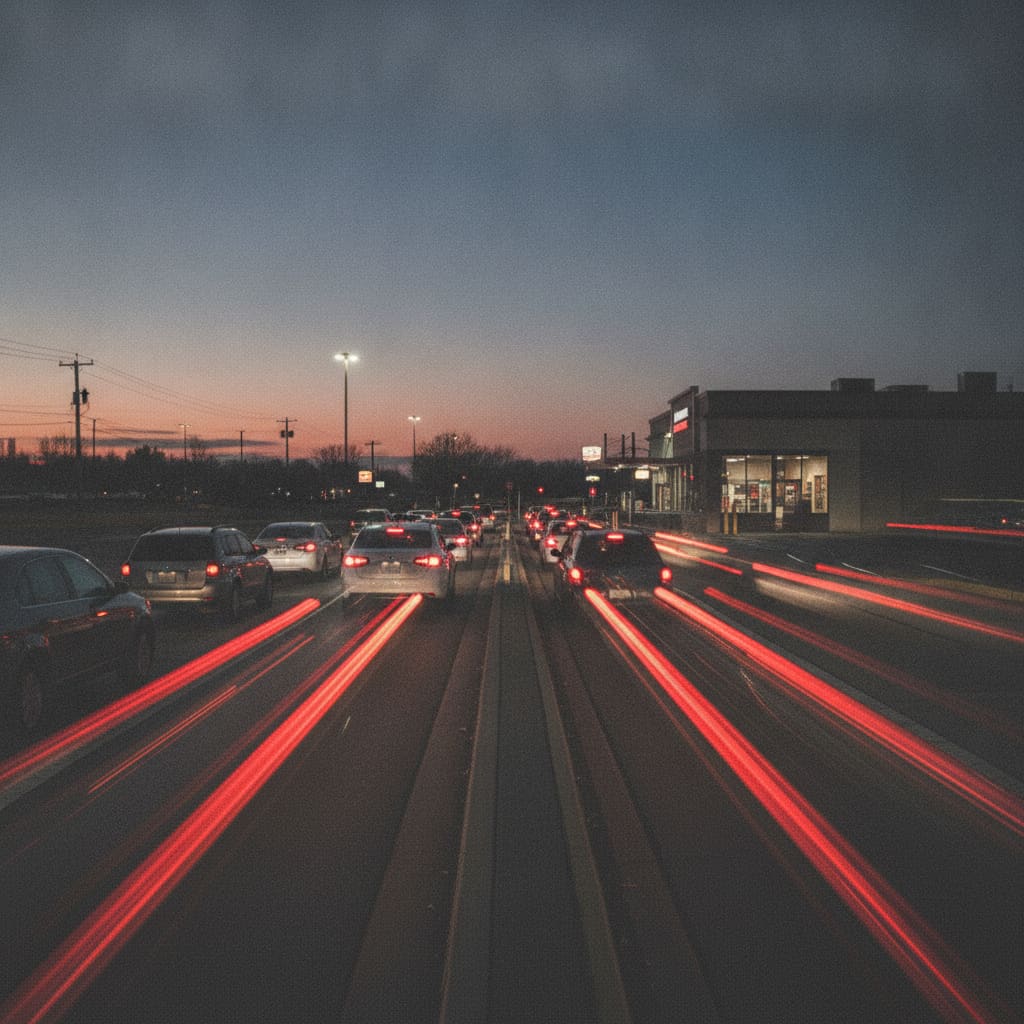
The drive-thru is the most optimized 200 feet of retail in the world. It has been timed, restudied, and re-engineered annually for a quarter century, and it is getting slower.
The 2025 QSR drive-thru study, run by Intouch Insight across 165 mystery shops per brand at 13 US chains, recorded an average total service time of 4 minutes 15 seconds, about ten seconds worse than 2024.
The number needs an asterisk
Two things are true at once, and both belong in the story:
- Measured across the full 2025 brand set, total time rose (5:29 in 2024 to 5:35 in 2025 on the broader measure).
- Strip out the brands newly added to the 2025 study and the comparable set was actually 33 seconds faster than the prior year.
So the industry did not universally slow down. The study widened to include more beverage-led brands, which run some of the slowest lanes, because a hand-built drink is a made-to-order product with no holding cabinet, and the average moved with the mix. That distinction gets lost in most coverage of the headline number and it is the more interesting finding.
Why the lane keeps getting harder
Speed is not eroding through incompetence. It is eroding because the job changed:
Menus got bigger. Every LTO, every customization, every plant-based or spicy variant adds a decision at the speaker and a step at the assembly line.
Orders got more complicated. Customization is the thing customers say they want most, and it is fundamentally at war with throughput.
The lane serves more channels. One kitchen now feeds the drive-thru, the front counter, mobile pickup, and three delivery platforms. Delivery orders are invisible to the person in the car and they consume the same fryer.
Labor turned over. Speed in a drive-thru is a trained motor skill. High turnover means a permanently partially-trained line.
What AI lanes are actually doing
The study's clearest signal: AI-enabled drive-thrus averaged 3 minutes 53 seconds, comfortably ahead of the 4:15 overall average.
The mechanism is less glamorous than "AI is faster at taking orders." Voice AI removes the variance: it never gets pulled to run the register, never gets distracted mid-order, and it upsells the same way every single time. In a system optimized to seconds, eliminating variance is worth more than raising peak speed.
Accuracy is where the case is still open. A misheard order costs far more time than it saved, and remake rates are the number worth watching as these systems scale.
What this means if you are the one in the car
- The lane is usually still faster than the counter, but the gap has narrowed enough that at a busy store with mobile pickup, walking in can win.
- Beverage-led brands are structurally slower. That is not your store having a bad day; it is what made-to-order drinks cost.
- Ordering ahead skips the speaker, not the queue. If the pickup window shares a lane, you are still behind the same cars.
Four minutes is a long time to sit somewhere you did not intend to spend four minutes. If you are going to be there anyway, it is worth knowing what the food costs before you pull in: the chain menu pages load faster than the lane moves.