Blog
Combo Meal Math: The Discount Is 10%, the Drink Costs Them 30 Cents
Franchisees discount bundled meals by an average of 10.4%. The fountain drink inside that bundle costs the restaurant about 25 to 40 cents and sells for $2.50 or more. Here's why the combo is offered to you so enthusiastically.
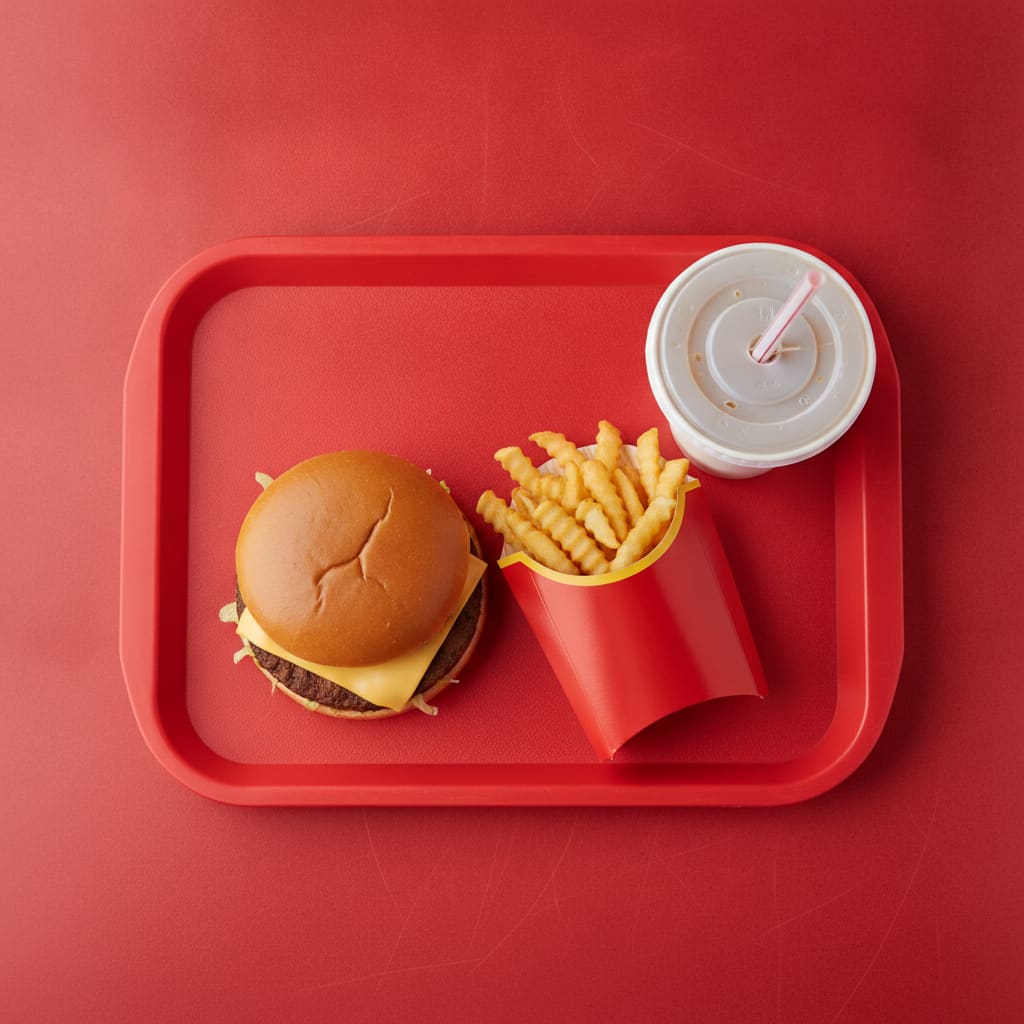
"Would you like to make that a combo?" is the most reliably profitable sentence in American food service. Here is the arithmetic behind why they keep asking.
The discount is real and small
Franchisees discount bundled meals by an average of 10.4% against buying the same items separately. That is a genuine saving. It is also considerably less than the presentation implies: the combo is displayed as the way to order, with à la carte prices tucked into a corner of the board, which makes the bundle feel like a category rather than a discount.
The drink is the entire business model
A fountain soda costs a restaurant roughly $0.25 to $0.40 all-in, syrup, carbonated water, cup, lid, straw. Break it down further: a 5-gallon bag-in-box of syrup yields about 200 twenty-ounce servings at around $0.26 of syrup per serving, with cup and lid adding roughly $0.16.
That drink sells for $2.50 to $3.00. Margins on fountain beverages are commonly cited at 70-90%, and on a $3 cup the markup runs several hundred percent.
Now the bundle makes sense from the other side of the counter. The sandwich is the low-margin item you came for. The drink is the high-margin item that fixes the transaction. Giving up 10.4% on the total to guarantee the drink is included is a trade the operator will take every single time, and the reason beverage suppliers throw in equipment, cups, and marketing support to lock the relationship in.
Fries sit in the middle: cheap input, meaningful labor and oil cost, high perceived value.
When the combo actually wins
Take it if you wanted all three items. A 10.4% discount on things you were buying anyway is free money. That is the honest case and it is common.
Take it if the size upgrade is nearly free. Upsize pricing is often a few cents per ounce, which is real value on the metric of volume, and terrible value on the metric of "food I needed."
When it does not
If you would have skipped the drink. Water is free. Paying $2.00-ish net for a beverage you did not want is not a 10% saving, it is a 100% cost.
If you would have skipped the fries. Same logic, more calories.
If the combo forces a size you do not want. Some bundles only exist at medium and up.
If you are comparing chains on the combo price. Bundles differ in composition, piece counts, drink sizes, whether a side is included, so combo-versus-combo is often not a like-for-like comparison. À la carte item prices are the comparable unit, which is why our menu price pages and chain comparisons index on individual items.
The rule
Order the items you want, then check whether a bundle happens to contain exactly those items. Doing it in that order costs nothing and immunizes you against the most profitable question in fast food.